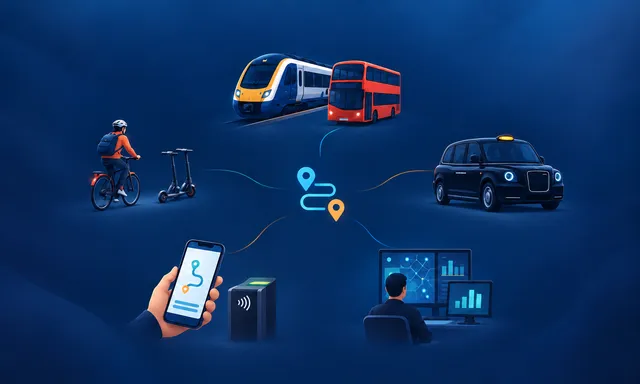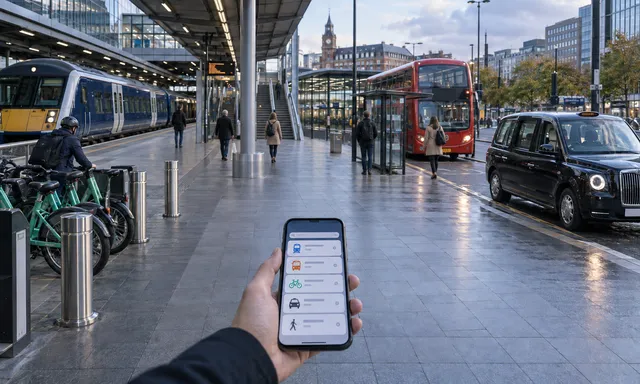
Mobility is increasingly used alongside transport to describe how people move expanding ecosystem of operators, technology platforms, data and public bodies rather than a single mode or vehicle. The terminology is already used across major transport research, policy bodies and industry organisations, reflecting how connected and digital the sector has become.
Transport has traditionally described the vehicles, networks and services that move people. As those services increasingly connect through digital platforms, data and technology, the industry has started using mobility as the broader term for that system. For a full breakdown of how the two terms differ and what falls under each, see what the passenger mobility industry covers.
Evidence That Passenger Mobility Is Established Terminology
The language already appears across several authoritative transport and mobility sources.
In 2020, Nature Sustainability published Future Passenger Mobility, examining future mobility demand, modal choices and transport systems.
The World Bank and Sustainable Mobility for All have also used Passenger Mobility as a distinct part of sustainable mobility, spanning public transport, private vehicles, urban and interurban journeys, walking and cycling.
The Glossary for Transport Statistics, developed through cooperation between Eurostat, the United Nations Economic Commission for Europe and the International Transport Forum, includes Passenger Mobility as a distinct area of transport statistics.
The European Commission also uses the terminology when discussing multimodal and multi-operator passenger mobility, and distinguishes passenger mobility from logistics in other transport initiatives.
None of this means passenger mobility has replaced established terms such as transport or public transport. It shows that the language surrounding how people move is broadening as transport services, technology and new mobility models become increasingly connected.
From Public Transport to Public Mobility?
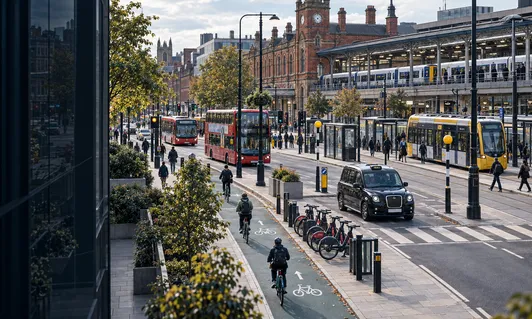
There is another signal worth noting. UITP, the International Association of Public Transport, is advocating the concept of Public Mobility. Its Leading the Way to Public Mobility work describes a wider system extending beyond buses, trains and metros to include shared bikes, e-scooters, on-demand services, walking and cycling.
That does not make public transport obsolete. Public transport remains fundamental. What is changing is its relationship with the services and technologies around it. The industry may see different modes, operators and systems. The passenger sees a journey. That is one reason broader mobility terminology is becoming useful.
Why "Passenger" Matters
The word mobility on its own is extremely broad. It can refer to passenger movement, freight, logistics, automotive technology, workforce relocation and other unrelated areas. Passenger mobility provides a clearer boundary, the ecosystem of organisations enabling how people move specifically, mapped in detail in what the passenger mobility industry covers. Freight, logistics and general automotive activity sit outside that focus unless they directly support passenger movement.
How MobilityTalent Maps the Passenger Mobility Ecosystem
MobilityTalent is mapping the organisations involved in enabling the movement of people. The Mobility Index brings together employers, operators, authorities, technology businesses, platforms and other organisations across the passenger mobility ecosystem.
Rather than another directory, it is designed to make the relationships between sectors, organisations, geographies and career opportunities easier to understand and discover.
The same fragmentation exists in employment. Rail opportunities may appear in one place, public-sector transport roles somewhere else, while technology, autonomous and emerging mobility jobs are often spread across generic platforms and individual employer websites.
Skills also increasingly move across those traditional boundaries. Data, software, engineering, operations, passenger experience, AI and sustainability can all apply across multiple parts of passenger mobility. MobilityTalent's aim is straightforward: make it easier to discover who is shaping the passenger mobility industry, where they operate and what opportunities exist across it.
Transport Isn't Disappearing
Transport terminology isn't going anywhere. People will keep searching for transport jobs, rail careers and public transport roles and governments and operators will keep using it. Mobility simply describes the increasingly connected environment around that movement. Urban mobility, shared mobility, public mobility, Mobility as a Service are all different terms contributing to the same underlying shift.
Whether passenger mobility becomes the industry's standard umbrella term remains to be seen. But the ecosystem it describes already exists, and MobilityTalent is mapping it.
Discover the organisations shaping the mobility industry on MobilityTalent, or join the MobilityTalent community to stay connected as the industry's language, and its opportunities, keep evolving.
Frequently Asked Questions
What does "mobility" mean compared to "transport"?
Transport traditionally refers to the vehicles, networks and services that move people. Mobility describes the wider system around that movement, the platforms, data, technology and public bodies that make journeys possible. The terms overlap, but mobility is the broader lens.
Is "passenger mobility" an official industry term?
It's not governed by a single official body, but it's already used consistently across research and policy, including Nature Sustainability, the World Bank, and the EU's Glossary for Transport Statistics, developed jointly by Eurostat, UNECE and the International Transport Forum.
Is transport being replaced by mobility as a term?
No. Transport remains the operational reality: the buses, trains and networks people use every day to get around. Mobility describes the increasingly connected environment around that activity. The two terms coexist rather than compete, and established transport terminology isn't going anywhere.
Why does UITP use the term "Public Mobility"?
UITP, the International Association of Public Transport, uses Public Mobility to describe a system extending beyond buses, trains and metros to include shared bikes, e-scooters, on-demand services and walking and cycling, without making public transport itself obsolete, just broadening what it covers.
What is the Mobility Index?
The Mobility Index is MobilityTalent's effort to map the organisations, sectors and career opportunities across the passenger mobility ecosystem, making the relationships between operators, platforms, authorities and technology companies easier to discover, rather than leaving each part to be found separately.